Moodboards in interior design
Why every ZMA interior scheme starts with a moodboard, before a single line is drawn.
If you follow design in general, and interior design in particular, you have almost certainly met the term “moodboard”. Getting to a precise definition is another matter. So what is a moodboard? What part does it play in interior design? This article sets out to answer those questions.
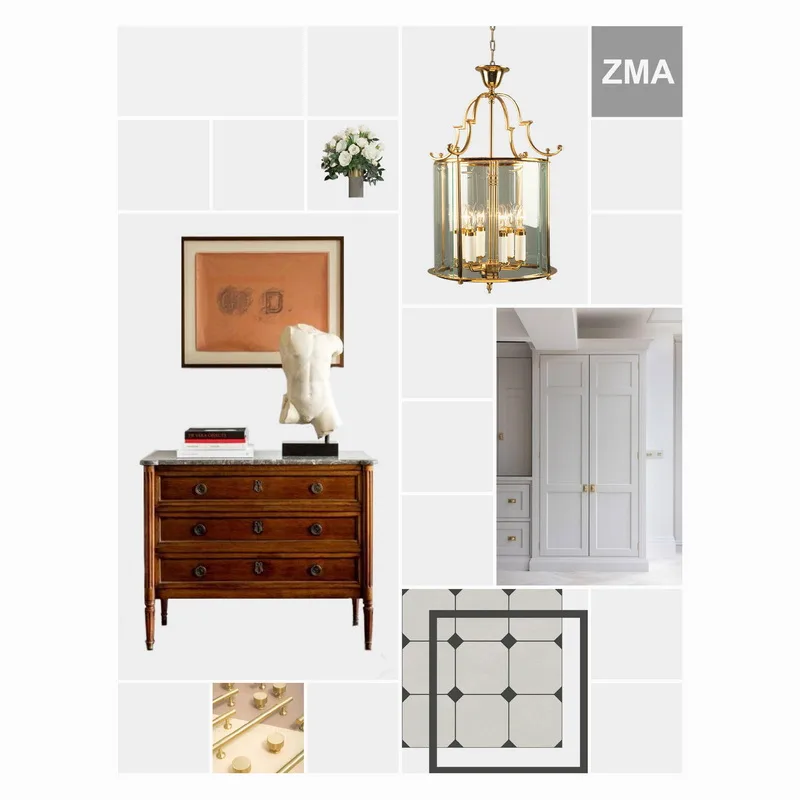
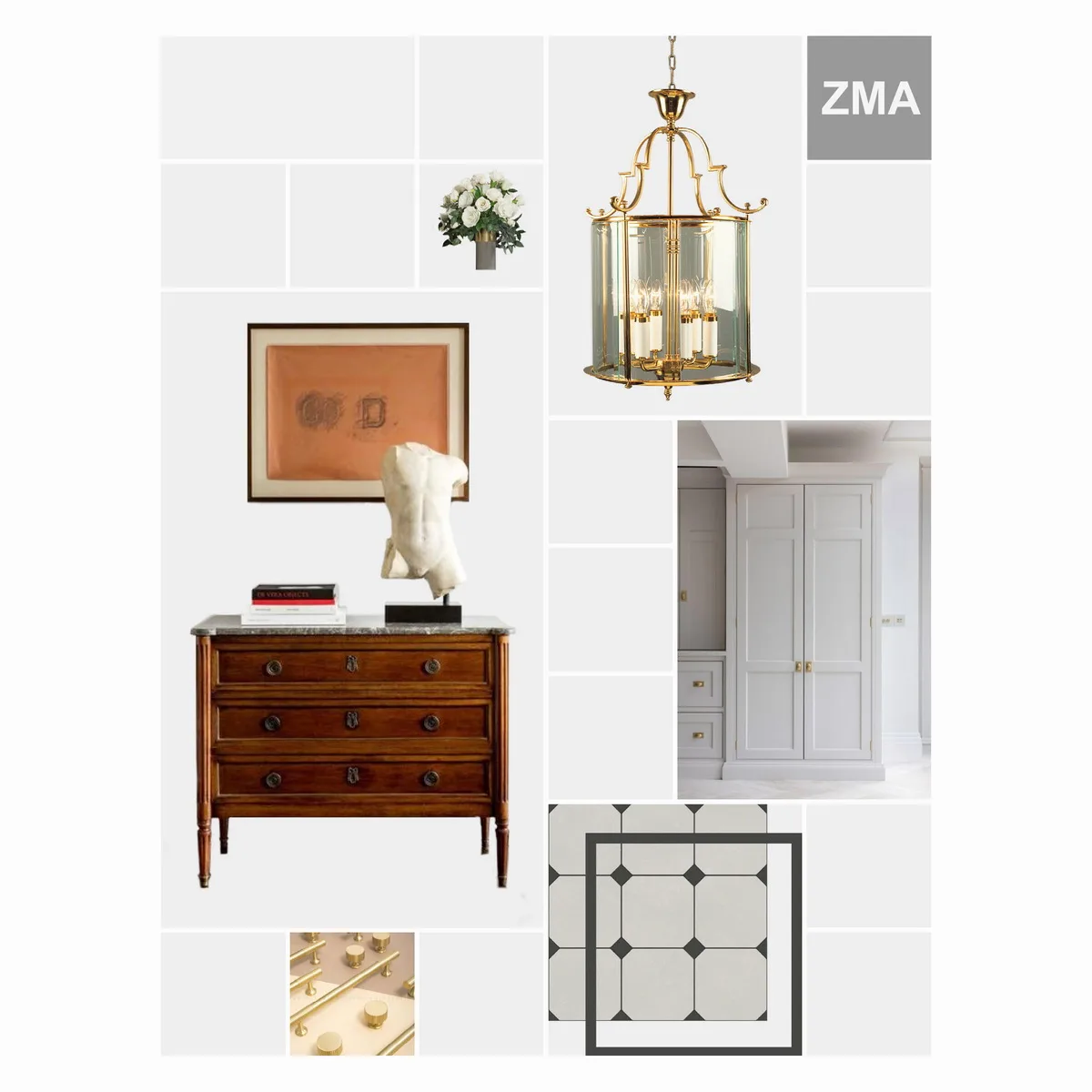 A moodboard from a completed ZMA project
What is a moodboard?
A moodboard is a surface on which trials — images, text, material samples — are set side by side. Those trials may be chosen around a theme or picked up by chance, but they always serve one purpose: to clarify the atmosphere, the tone, the feeling, the mood, the character of an idea you are reaching for.
A moodboard can be physical — cut-out images and material samples laid next to one another — or a digital composition assembled on screen.
Today, professional designers across graphics, photography, architecture and interiors use moodboards as a working tool. It is an important first step, because it sets the direction everything downstream will follow.
Does a moodboard cost you your creativity?
Opinions differ. Ours is simply: no. Here is why.
No act of creation happens without something already there to build on. Creativity has three basic components.
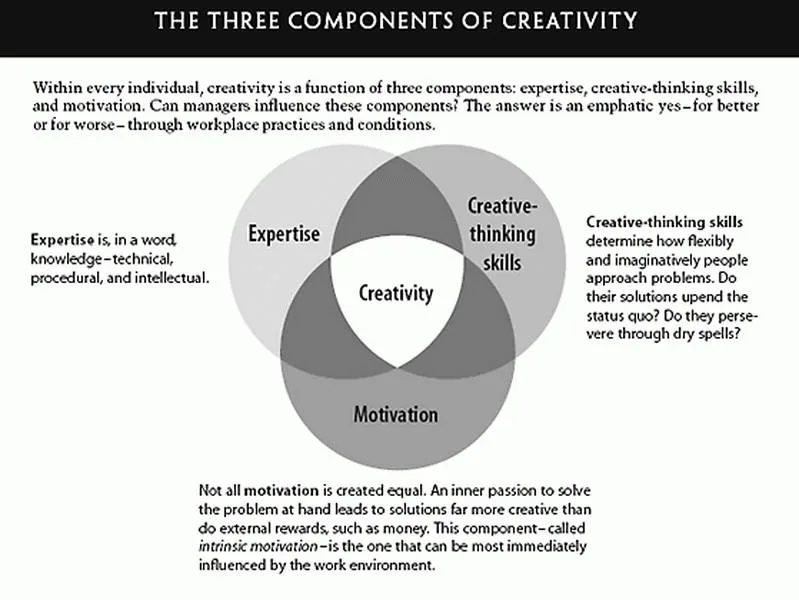 Componential Theory of Creativity — Teresa M. Amabile
- Expertise — knowledge of the discipline and the skills that belong to it
- Creative thinking skills — how flexibly and imaginatively you approach a problem
- Motivation — drive, and above all drive that comes from within
Creativity is a process that connects many things at once. Every person is a distinct individual thinking in their own abstractions, so do not hesitate to look for inspiration in the world around you — filter the enormous flow of material available today into a foundation of your own.
Moodboards in interior design
Whether you are the homeowner or the designer, have you ever lost your bearings and been unable to say what you actually want? If so, it is worth looking again at how a moodboard is made.
Work like a funnel
Do not hesitate to make different moodboards at different stages of a project. Early on, a moodboard tends to be abstract, dealing with feeling rather than with specific ideas or drawn lines. Later, and the closer you come to the end, the more concrete it becomes — by then it is little different from a shopping list for the house.
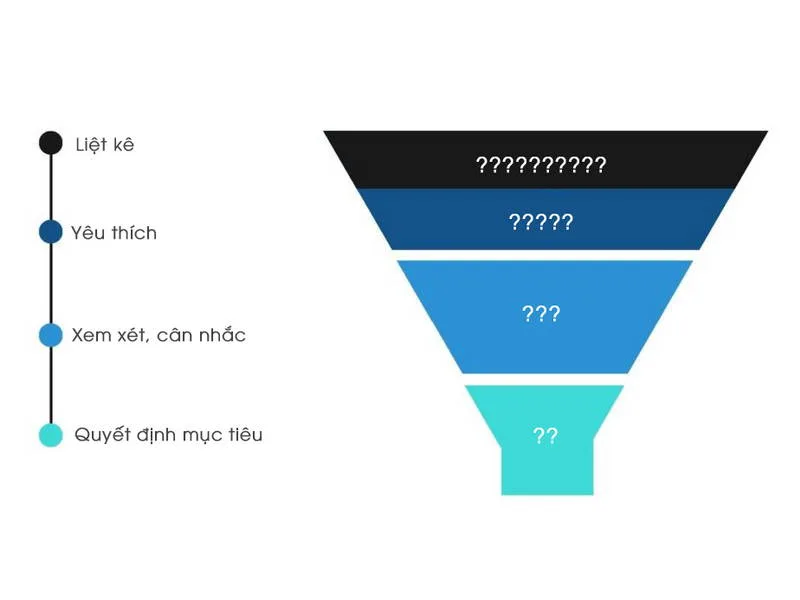 The funnel: abstract at the start, specific by the end
Cut the cake
Begin by thinking about how you use space. Picture yourself living there: how do you want it to feel? Some people know exactly which functions come first; others find it more tangled.
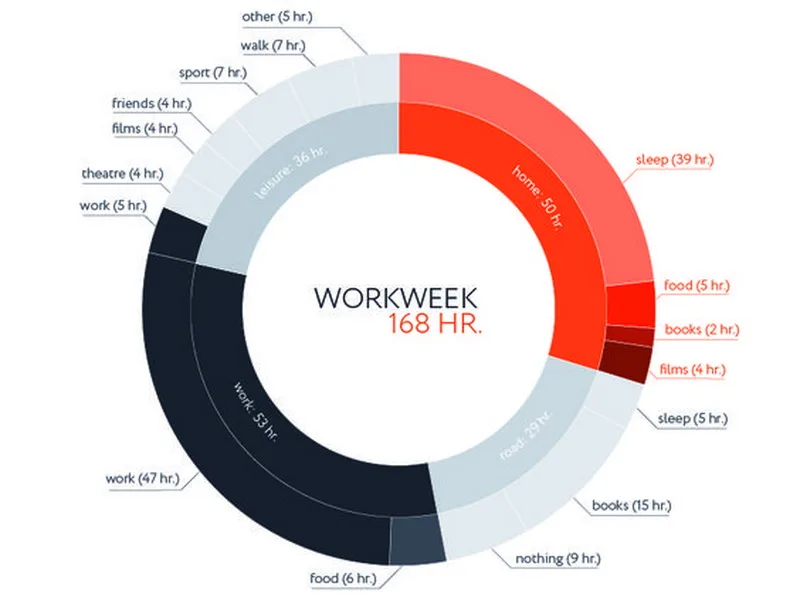 A week mapped out — each slice is a priority
How many hours of the day, of the week, will you give to each activity? Which of them matters most? Draw a circle and sketch out those activities, each one sized to the slice of time it takes. It gives you an overview of what your design actually has to prioritise.
What goes into a moodboard?
There is simply no single formula. Everyone is different. Some people find it easy to picture the finished result in their heads; others need more help and support. What follows are some elements to consider — none of them compulsory, because you decide what you need.
1. Feeling and intent
Picture it → define what you are looking for → search → decide the feeling and the intent.
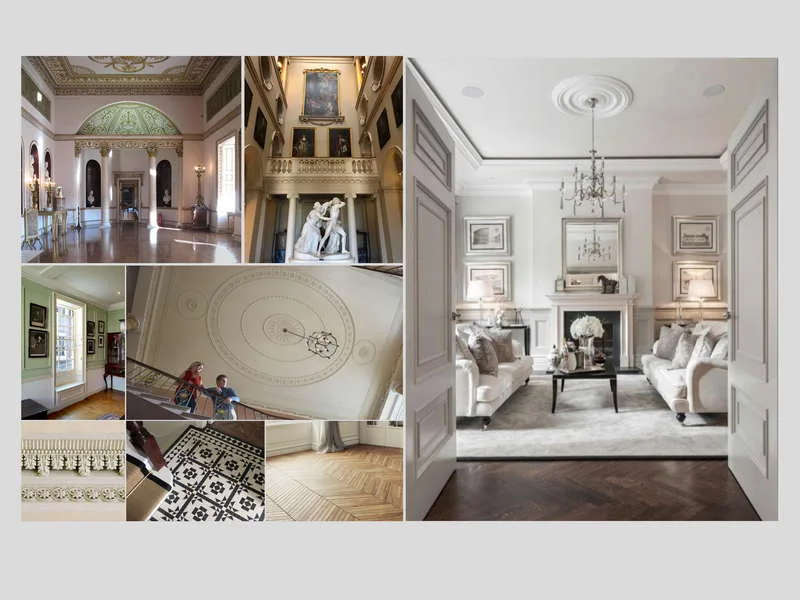 References ZMA gathered while developing the idea for a Georgian-style villa
Imagine life in the apartment. What do you want to do there after a hard day's work? Gather the family around a meal, stretch out on the sofa in front of the television, share a hot cup of tea with someone close, throw a good party with friends? Work out what you want, and pin it to your board.
Following those themes, go out and look for images and ideas that interest you. Keep an open mind and analyse what makes a room beautiful to you: the clever solutions, the colour, the light — anything that moves you. Magazines, brochures and the internet are unmatched sources. But do not lose sight of your own needs and intent, or this stage will leave you confused and adrift. Even if you do drift, it hardly matters: it is temporary, an experiment in ideas and taste.
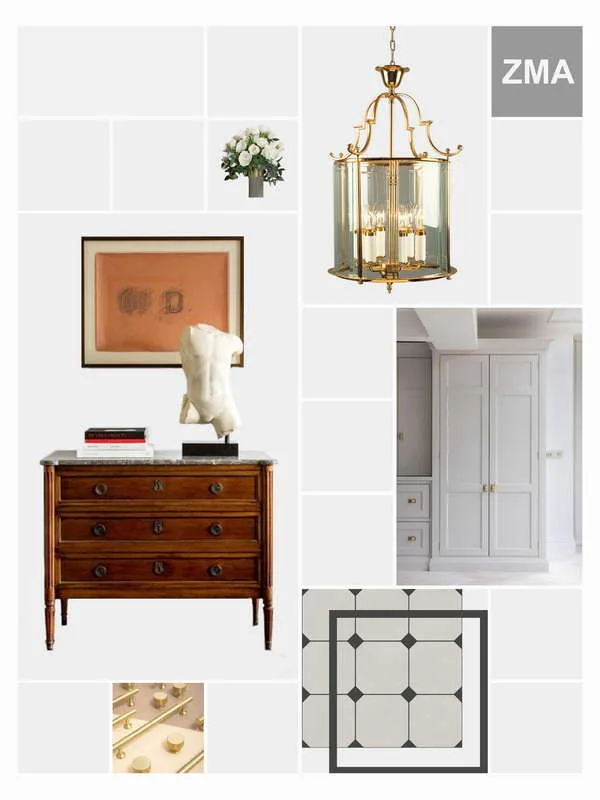 Georgian references in the HS23 concept documentation
Finally, give yourself time to look the ideas over, make the final call, and find what you genuinely like and want.
2. The exterior
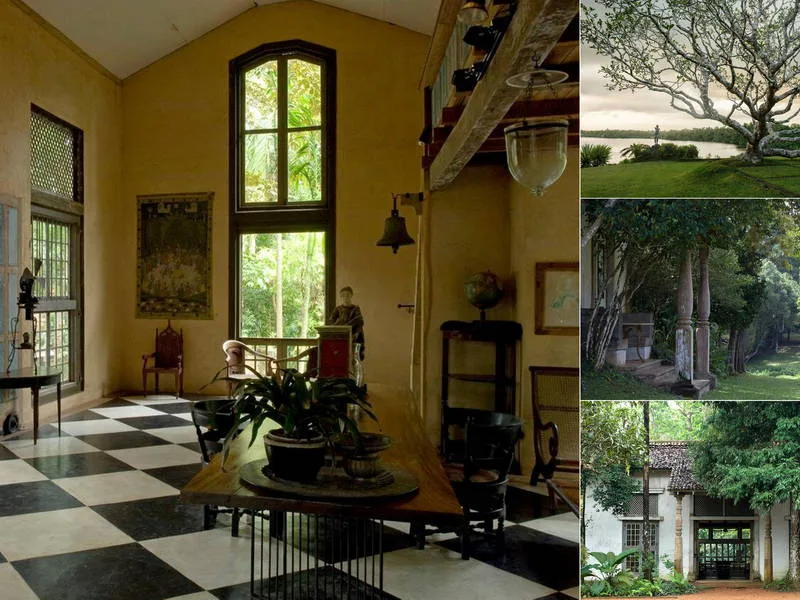 No. 05 @ Lunuganga — Geoffrey Bawa
A great deal comes from the architecture of the outside of the house, and it drives the moodboard along: the exterior style, the period, the structure, the colour of the elevation, the houses standing next to it.
3. Interior style
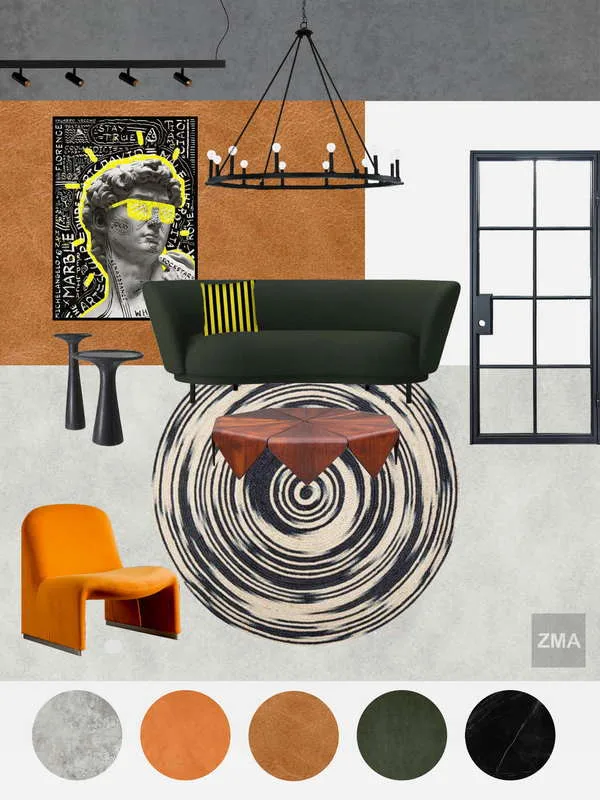 A moodboard ZMA produced for a Loft-style apartment
Once you have looked through a certain number of images, a preferred style starts to take shape in your mind. What follows is arranging and filtering until things become clear. Three things to hold on to at this stage:
- Remember what you like most, and drop anything that is not 100% what you want.
- What is achievable, and what is out of reach? Nothing is more dispiriting than pushing for something that cannot be built in the end.
- What suits you now, and what will still suit you later?
As the number of images comes down, the moodboard becomes easier to read. The question then is: what is it in these images that draws you? What features make the style? And what do you have to follow to achieve the same in your own home? Some prompts:
- The furniture and the key pieces that go with it
- The shape and outline of spaces and objects
- Details of ceiling, floor, walls, and any artwork that stands out
- Daylight, and the lighting that gives a room its atmosphere
- Rugs and flooring
- Plants — foliage or flowers
- The overall feel of the space (modern, classical, minimal, warm…)
- The colour palette (warm, cool, or neutral…)
4. Furniture you already own
Pieces you have lived with for years, or anything you do not want to change, are often an excellent starting point. They make it easier to bring old and new together, and they can set the palette or a style that lasts, precisely because it rests on things genuinely loved — often more compelling than whatever is current.
To bring existing pieces onto the board, look for photographs of similar furniture online, or simply take a picture on your phone.
5. The colour palette
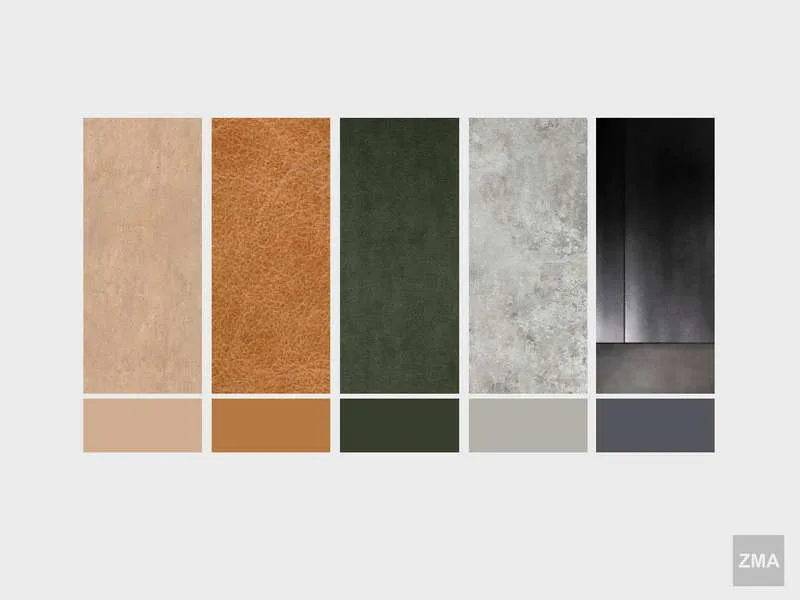 The interior palette ZMA used for apartment MLB, Mipec, Long Bien, Hanoi
How colours combine is the foundation of an interior that works. So it is worth understanding their character and how they behave, in order to settle on a palette that runs through the whole space. We will return to this in a later article.
6. The material board
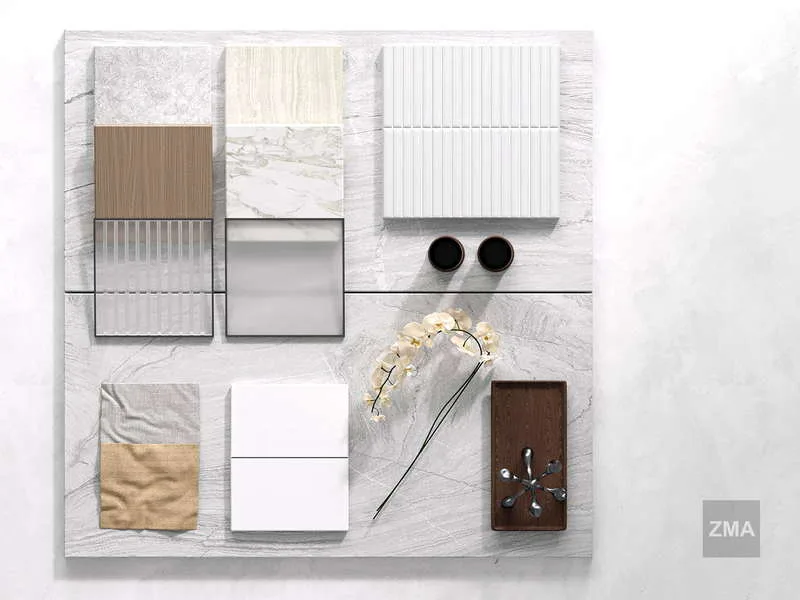 The interior materials ZMA used for apartment HAP, Legacy, Thanh Xuan, Hanoi
Decide which basic materials you want present in the space. Do you prefer pale timber or dark? Warm metals or cool — chrome, silver, pewter, brass? Natural materials or powder-coated finishes? Which fabrics: patterned or plain; satin, linen or velvet? If your moodboard is physical, order samples from manufacturers and retailers — nothing tests a combination better than seeing it laid out together.
7. The senses
An interior project can easily stop at what we see. But what we want to raise here is how it feels to be inside it. How will our senses meet that space? What do you feel when you touch it? Do you want the scent of timber, or of flowers? What sound will fill the room? Is there a memory, or some daydream from childhood, that you want it to bring back?
In closing
We hope this article gives you a clearer view of what a moodboard does in interior design, and that you can put it to use as a way of expressing the space you have in mind.
It was written from experience gathered in practice, drawing together and translating a range of sources.
- Componential Theory of Creativity — Teresa M. Amabile (Harvard Business School)
- Wikipedia
- The Interior Design Handbook — Frida Ramstedt
- The Interior Design — Chris Grimley + Mimi Love